Is AdCreative.ai worth buying? Use scores to shortlist ads, not to decide what runs
If your team makes more ad variants than it can test, try AdCreative.ai for screening. Have people verify product claims first, then test the ranking in real campaigns. A high score is not a return.
An e-commerce team has several static ads for the same product but can test only a few. AdCreative.ai’s creative scoring is worth trying as a first pass if the team can review claims consistently and let a high-scoring ad and a human pick compete under the same conditions. If only two ads are ready to run, or traffic is too low for a comparison, put your effort into testing the existing ads instead of adding a scoring step.
Approve ads for use before choosing which ones to test
AdCreative.ai’s help center describes the Performance Score as a prediction based on click-through rate (CTR) and the Awareness Score as an estimate of impact on brand awareness. It says scoring requires a brand and project, then asks users to select an ad platform and objective and describes an attention heatmap. Compare creatives for the same platform, objective and placement specifications. If the system marks text on the packaging as the ad headline, correct the label and rescan before using the score to rank that image. A heatmap may prompt you to check whether the product or headline is overlooked, but it cannot prove where people will look. Scores cannot be used to calculate orders, profit or return on ad spend.
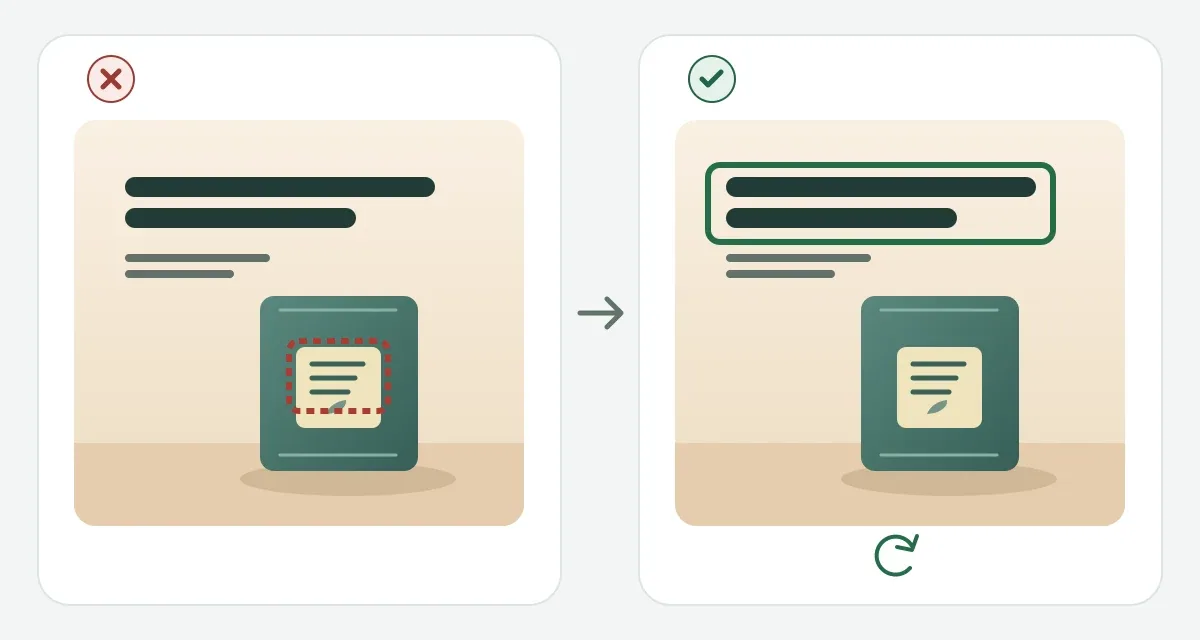
Illustration using the same fictional ad, not a product screenshot. Leave the score from the mislabeled scan out of the ranking. Correct the headline annotation and rescan before considering the updated score.
Check factual claims before scoring. Whether an image is made by hand or generated, verify price and promotion terms, product appearance, usage rights and claims about what it does. If the product page promises only splash resistance but the graphic says “waterproof,” send it back for revision rather than keeping it because it scored well. Have the product or brand owner sign off on ads that can run. Rank only those approved images.
Keep an independent, score-blind comparison
Use the same ad brief for a small pilot. Ask colleagues to choose an ad from the approved set without seeing the scores, then check the tool’s ranking. If both select the same image, don’t force a difference; record that scoring did not change the choice. If they differ, choose one candidate from each arm and use the ad platform’s split-test feature to distribute traffic as evenly as possible. Keep the audience, placement, copy, landing page, timing and conversion attribution settings the same. If you cannot, do not attribute the difference in results to the image alone.
Set the primary metric, minimum sample requirement and stopping rule before the test. If the goal is purchases, compare actual purchase metrics and use CTR only to explain what happened along the way. Do not stop just because one ad leads early. If traffic is too low or results are close, call it inconclusive rather than declaring the high-scoring ad the winner. Record time saved in screening alongside additional time for label corrections, review and retouching, not just the time the scoring tool saves.
If scoring repeatedly narrows the shortlist faster on similar jobs and selected ads do not consistently underperform human picks in tests that meet the sample requirement, consider adoption only if the value of the net time saved also exceeds the cost of the plan you need for scoring. If most candidates fail factual review, ranking is not the bottleneck. If that happens or tests repeatedly fail to support the ranking, stick with human selection and controlled testing. Pay for screening that saves work without weakening validation, not for a number that looks precise.
Content note:This article is based on publicly available information and is intended as a reference for evaluating tools. Features, pricing, and related policies may change at any time; please refer to the latest official information.
Original source:help.adcreative.ai