Should you use Adomate? Test whether a designer can verify the brief
Adomate traces creative concepts to Meta data, ads and reviews. It is worth testing if your team spends time reconstructing where ideas came from and can measure whether designers receive verified briefs faster.
Adomate is worth trying if your ecommerce team writes a batch of Meta ad briefs every week, has its own campaign data, and spends time switching between reports, ad libraries and reviews. Stick with a manual brief if everyone already works from one source sheet or your brand has too little relevant evidence. Generating more ideas will not make missing evidence appear.
A source can explain the idea without substantiating the claim
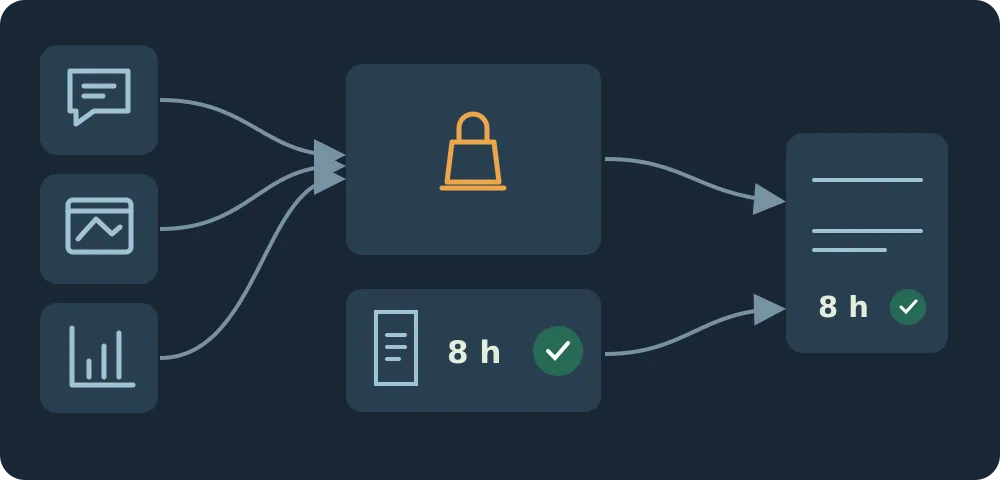
Adomate's launch materials list three inputs: your own Meta campaign data, the Meta Ad Library, and Trustpilot or Amazon reviews. The maker says you can trace a concept back to the data point that triggered it. That is useful during handoff: a designer should be able to distinguish a past result from a competitor's structure or a customer's words without asking the strategist. A linked source still needs review. Strong performance on a past ad does not predict the next one.
Take a fictional portable lamp. A review that mentions camping suggests a setting, not longer battery life. A rival ad that shows the setting before the specs suggests a structure, not permission to copy the image or text. Strong clicks in your own Meta report are a reason to test the angle again. To claim “8 hours of battery life,” use an approved product specification and verify the brightness setting and test conditions. If you cannot substantiate it, leave it out.
Compare it with a manual brief before connecting more data
Choose one product, one market and one date range. Have the same team produce three design-ready briefs each way, with the same scope of inputs, using its existing sheet and Adomate. Use synthetic reviews or materials you are authorized to use with personal details removed. Connect only approved test data; no production publishing access or live campaign is needed. Give the briefs to a designer who did not collect the evidence. Ask them to find the original trigger, identify which statements can go public, and send back any claim without a source or approval. Track briefs accepted, time to handoff, verification and rework. Include permission checks and expected monthly usage in the cost. Repeat the comparison with a second brief.
Consider paying if the tool cuts handoff time across two rounds without missing questionable claims. If the designer still has to dig through the original sheet, or you cannot connect a key input, keep the manual brief and record the source, conditions and approver for each claim.
Content note:This article is based on publicly available information and is intended as a reference for evaluating tools. Features, pricing, and related policies may change at any time; please refer to the latest official information.
Original source:www.adomate.com