Is Agility Writer’s optimization worth paying for? Count source checks and image repairs too
Teams with existing English-language professional articles but limited editing time can evaluate Agility Writer’s G-Smart Optimizer. Adoption should depend on reaching the same publication standard faster, not just scores or drafting speed. Verifying new claims, restoring images and credit costs all belong in the calculation.
A content team already has a sourced professional article in English. Its problem is wandering paragraphs and weak transitions, not a shortage of publishable facts. This is a useful starting point for evaluating Agility Writer’s G-Smart Optimizer: let it propose revisions, then have an editor decide which changes to keep. Paying for it makes sense only if bringing the candidate to the same publication standard takes less total work. Treating a higher content score as proof of greater factual accuracy or better search rankings would distort that decision.
The official changelog says G-Smart Optimizer accepts existing external articles and charges credits per article, rather than only optimizing drafts generated within Agility Writer. The help documentation distinguishes the lighter Enhance mode from the more substantial Extensive rewrite and provides version comparison and restoration of the original. Extensive is available only with premium AI models; non-premium models generate only Enhance. It recommends articles within 2,500 words, with a 5,000-word maximum. English is the vendor’s preferred scope for results; the documentation explicitly excludes Arabic and Hebrew from this optimization feature. Support for a language in the overall writing product does not establish support in the optimizer.
Preserve claims that are already supported
Evaluate a copy of an article you have the right to process, without connecting the production website or enabling automatic updates. Start with manual review and retain the original and the sources supporting key sentences. Suppose an equipment-maintenance article says “inspect every six months under normal operating conditions,” but the revision says “inspect all equipment every six months.” Even if it reads better and scores higher, removing the condition is grounds for rejection. Compare the original sentence, the revised sentence and the relevant source passage side by side. Pay particular attention to scope, dates, quantities, negatives and any newly asserted firsthand experience. This is an acceptance-test example, not an observation of actual product output.
The vendor’s help page specifically warns that optimized drafts may contain sample citation links that need replacing with correct sources and may lose images. A citation opening a web page therefore does not complete verification: the page must support the specific nearby claim, and added passages need their own evidence. If an original image explains equipment parts, a sequence or data, losing it can make otherwise fluent text unusable. Check that images, captions and references to them still match. Restoring the original through Revision provides a fallback, but cannot decide which version is correct on an editor’s behalf. If nobody on the team can verify these changes, continuing with manual editing is more appropriate than handing that responsibility to a score.
A few minutes less rewriting may not cover another verification pass
The official billing basis for external article optimization is 1 credit per article, with In-Depth Research adding 1 credit. At those units, optimizing 20 existing articles once each would use 20 credits; adding in-depth research to all of them would total 40. This is not a dollar quote and excludes separately generating new drafts or other operations. Some eligible articles created in Agility Writer receive one free audit and optimization, which does not make the external-article budget zero. Before buying, check the selected plan’s credit allowance, expiry and additional charges. Dividing a monthly fee by a theoretical maximum article count is not an actual cost calculation.
Then count editorial time. Suppose manual revision to publication standard used to take 45 minutes per article. With the optimizer, selecting and editing text takes 12 minutes, checking sources takes 18, and restoring and checking text against images takes 10. The total is 40 minutes, a net saving of only 5. These are hypothetical figures, not a speed promise. Both routes must use the same factual, image and publication acceptance standards; checks included in the manual route cannot disappear from the tool-assisted one. Any final review required in both must also be counted equally. Compare the labor value of those 5 minutes with the additional plan fee or credit spending to judge whether adoption pays off.
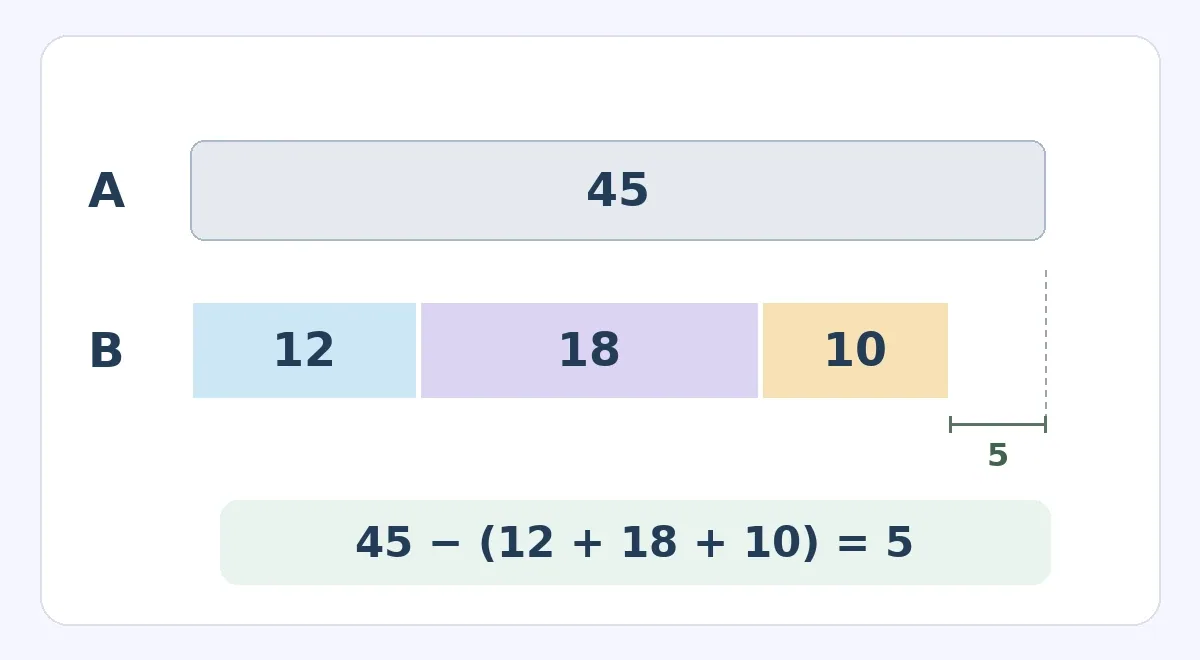
Original hypothetical diagram, not a product screen or measured result. Units are minutes. B runs left to right: selecting and editing text, checking sources, and restoring images with text-image checks. Its first segment alone cannot be compared with A’s complete process.
For teams that regularly revise medium-length English explainers, can check sources claim by claim and find that version comparison genuinely shortens the complete editing process, G-Smart Optimizer can serve as an editorial assistant. If the original only needs two wording changes, depends on precise technical qualifications or gains information that cannot be verified, targeted manual revision is usually a safer starting point. For an initial evaluation, retain one original, its candidate revision, reasons for accepting or rejecting changes, and actual working time. Decide the budget after that test, rather than increasing output merely because more articles can be generated.
Content note:This article is based on publicly available information and is intended as a reference for evaluating tools. Features, pricing, and related policies may change at any time; please refer to the latest official information.
Original source:agilitywriter.ai