Should you use ai-crew? Improve the interview questions, not the demand forecast
Compare ai-crew with a teammate's review on a fictional equipment booking brief. Score questions that are neutral and can prove an assumption wrong.
A synthetic persona can help you notice what you have not asked. If your team already reviews interview guides with counterexamples, start with a colleague. If each guide mirrors your proposed feature, ai-crew is worth comparing as a source of hypotheses. The supplier describes a persona generator and says its synthetic personas do not replace conversations with real users.
Use a fictional office equipment booking brief
Imagine adding a “join waitlist” checkbox. Give ai-crew and one teammate the same fictional brief with no identities, internal data or credentials. Simulated roles might mention not knowing how to cancel, missing a cutoff, or seeing two requests for one slot. These are possible scenarios, not feedback from three people. Turn each into an open question about past behavior: “How did you handle the last cancellation on short notice?” Avoid “Wouldn't a waitlist checkbox solve that?”
ai-crew generates three personas from one brief. Ask all three the same question in Round Table and inspect the individual answers before the summary. Record agreement as one hypothesis to investigate, not a vote to rank priorities.
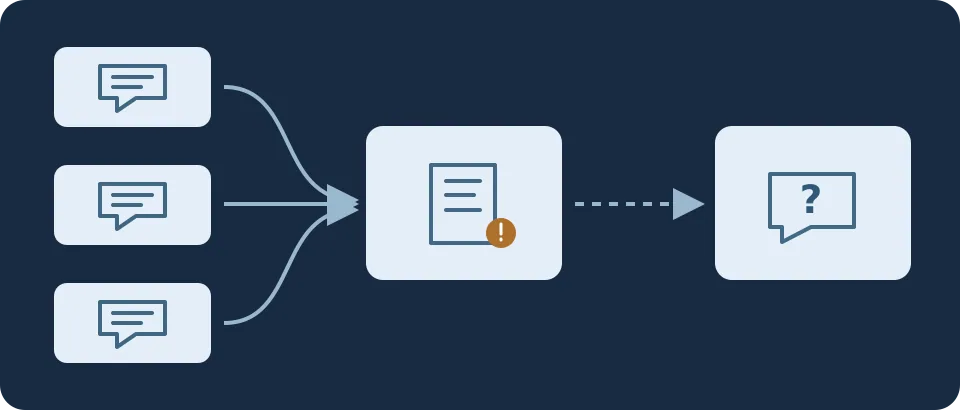
Figure 1. Take the questions into later research. None of the three simulated comments counts as participant evidence.
At the published rates, one Round Table question plus three one-to-one follow-ups costs five credits, before persona generation. Cap follow-ups and record the spend alongside the number of usable questions.
Score what the question could establish
Ask a third teammate to review questions without knowing the source. Is each neutral, does it elicit something concrete, and what answer would disprove the assumption? If people canceled without visiting the booking page, for example, that weakens the idea of putting a control there. Repeat with another fictional brief. Compare usable questions, rewriting time and duplicates. Contacting real participants and establishing demand are separate research, not part of this score; send no invitations for the exercise.
Check trial access and cost if both rounds surface testable questions your reviewer missed without adding cleanup. If the tool mainly produces lines that agree with the idea, keep the teammate review and save time for future research with real participants.
Content note:This article is based on publicly available information and is intended as a reference for evaluating tools. Features, pricing, and related policies may change at any time; please refer to the latest official information.
Original source:web.archive.org