Choosing AIRANKS: A reachable file is not proof of an AI citation
Separate your website’s accessibility, observed citation evidence and business results before adopting a report.
Teams checking their own public documentation should distinguish readable files from citation evidence. AIRANKS describes technical site-file checks separately from observed mentions and cited URLs, and its maker explains why a fetch is not a citation. For a single robots.txt or sitemap check, open the file and review your own release records and logs. A combined report is more useful when the team regularly needs both technical checks and traceable citation observations.
Keep two evidence records
Use two public test pages you maintain, perhaps an original fictional product manual. Record whether the sitemap lists the exact URL, the public file is what you expect and requests redirect elsewhere. A success code proves that request worked, not that an AI model read it. In a separate citation column, check the sample scope, date and actual link when the report preserves an answer. Distinguish another page on your domain from the target page. If no record exists, write “not observed in this sample,” not “never cited.”
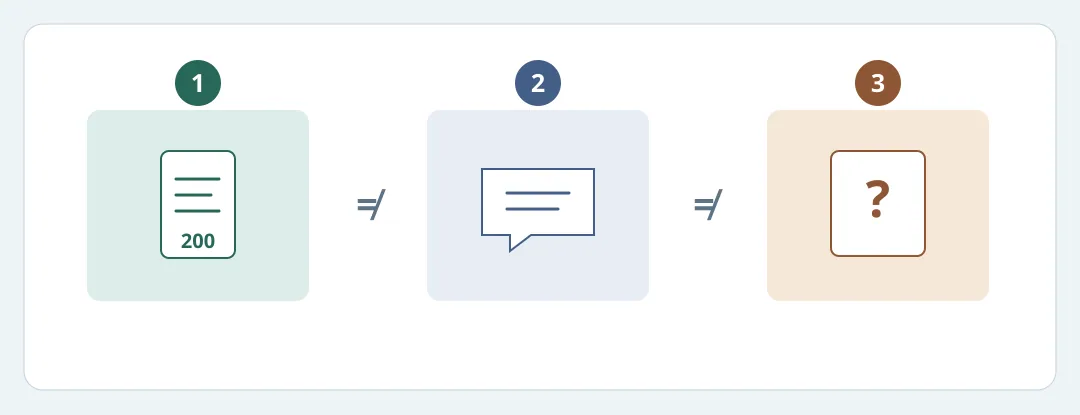
Figure 1. Check the first on your own site, trace the second to an answer and URL, and use independent data for the third. Original diagram.
Fix verifiable release problems first, such as a stale sitemap URL. Do not loosen access just to improve a score. A citation is not a visit, so record site traffic independently. Keep manual checks when there is no need for repeated or cross-page evidence. Adopt a report only if another reader can verify the files and citations, explain the sample and counts, and spend less time checking than with your manual approach.
Content note:This article is based on publicly available information and is intended as a reference for evaluating tools. Features, pricing, and related policies may change at any time; please refer to the latest official information.
Original source:airanks.net