Algor Education concept maps: check arrow direction before using them in training
Audit direction, qualifiers and paragraph references against an adult-training text you wrote yourself.
A concept map can help new staff see a sequence, or turn “only after” into a reversed instruction. Algor Education’s 2025 tutorial shows maps generated from supplied text, and its guide describes editable nodes and links. Treat the result as a draft for review, not as the source policy.
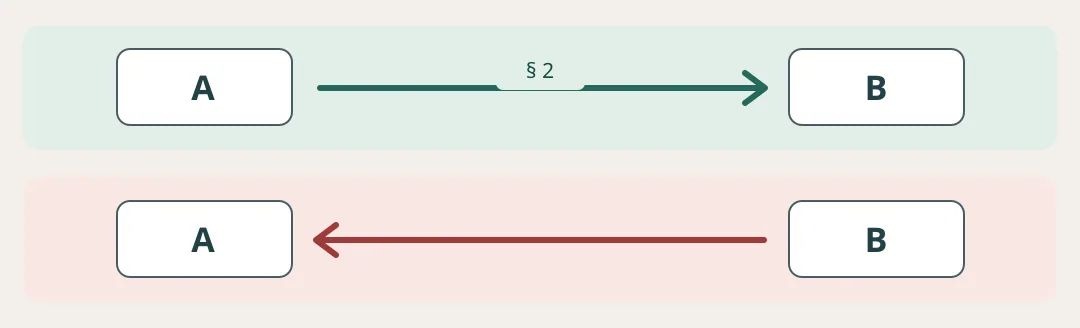
Figure 1. Original illustration, not an Algor output. The nodes match, but the rules they express do not.
Give each critical arrow a source paragraph
Write three paragraphs of fictional adult-training material. Paragraph 1 defines A as checking that a kit is complete and B as entering it in an internal register. Paragraph 2 says B can only follow A; paragraph 3 says samples never enter B. Draw a reference map by hand, then use the same text for the Algor draft. Read each arrow as a sentence: A→B must stay in order, “only after” must not become “always,” and the sample exception must remain. The §2 label is an editor’s check, not a claim that Algor automatically cites every edge.
Score the three predefined relationships for correct direction, qualifier and source; require 3/3. Check in-plan editing and export, then time both routes through verification, link corrections and layout. If generated drafts keep dropping the exception, prefer a hand-drawn source-linked map or a numbered checklist. Don't throw away the original for a tidier layout.
Content note:This article is based on publicly available information and is intended as a reference for evaluating tools. Features, pricing, and related policies may change at any time; please refer to the latest official information.
Original source:www.algoreducation.com