Choosing AmazVid: the product looks right in the first frame, but is the rest worth paying for?
Compare five-second and ten-second Product Shots with footage you shoot yourself. Check product fidelity across the full clip, then include paid retries, review time, and image-sharing restrictions in the adoption decision.
AmazVid’s Product Shot is worth comparing when you already have approved product stills and want a short, silent showcase video. The most useful alternative is not another tool with more dramatic camera moves. It is a silent clip of the same length that you shoot using your own product. Which route preserves the actual structure and remains easier after review, retries, and reshoots? If buyers need to inspect ports, rear labels, or package contents, include real footage in the comparison first.
AmazVid accepts a product image or product link and uses the selected image as the first-frame reference for a short silent clip. Product Shot is aimed at product-display camera moves. A reference-constrained first frame is an input method, not a guarantee of fidelity throughout the video. The vendor’s terms explicitly do not warrant every frame’s accuracy, conversion, or platform approval. Treat a completed job and a usable showcase as two separate acceptance decisions.
Decide which details must never change
For an initial workflow check, draw your own fictional, unbranded package with three short lines and one rectangular mark on the front, with a defined silhouette and proportions. Include no real brand, person, customer information, or unreleased product. Make the number of lines, the mark’s location, and the box’s structure explicit checks. The background and lighting can change; product attributes cannot be reinvented by the camera move. This synthetic sample checks the workflow, not how the system will perform on a real product.
Both sequences in the figure start from the same reference. The upper row retains three short lines; the lower row quietly gains a fourth line in the middle. Judging only the cover or first frame makes both look acceptable. If the change depicts a different model or package, reject the latter. Three representative positions help locate the issue, but acceptance requires watching the complete clip, not sampling only three frames.
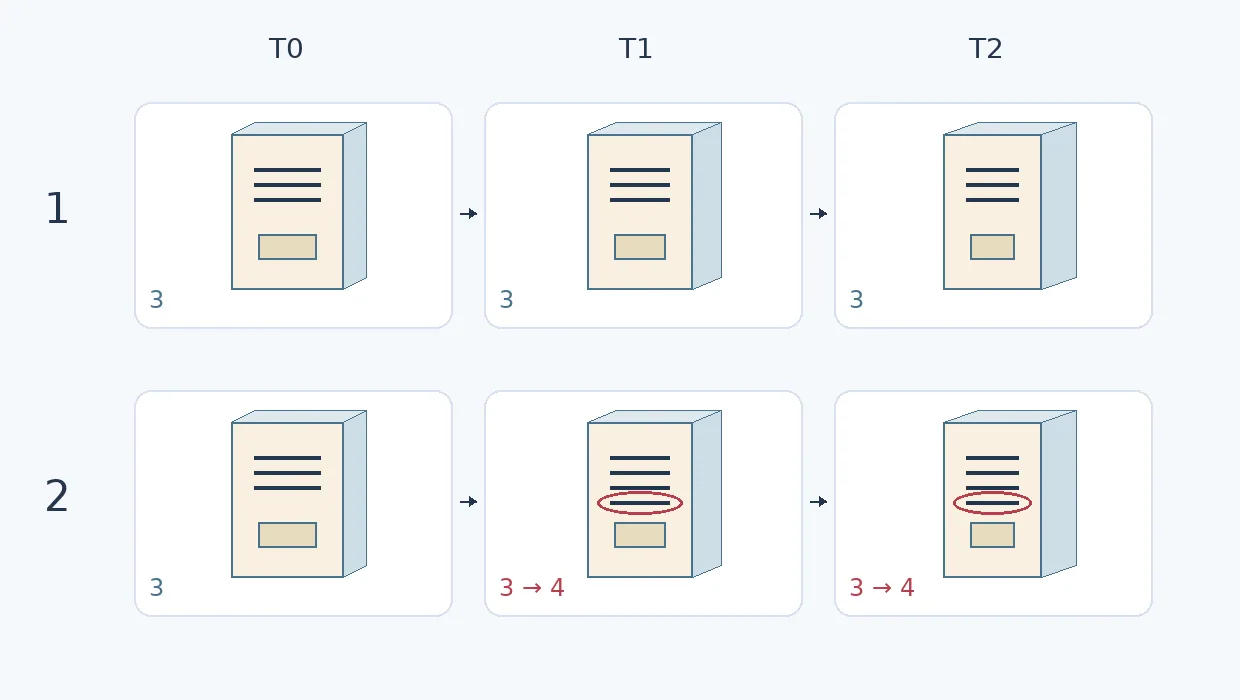
Original synthetic storyboard, not an AmazVid interface, generated result, or test. Row 1 is a hypothetical shot retaining three short lines. Row 2 gains a fourth short line in the middle and final views, highlighted by red circles; both start with the same frame. The three positions explain checkpoints, but the whole clip must be reviewed. No real brand or person is shown, and the diagram does not establish the product’s success rate.
During review, record product identity and shot usefulness separately. First inspect verifiable counts, contours, ports, text, and included items, then ask whether the shot reveals information the buyer needs. A smooth invention of rear details absent from the reference is not evidence of what the product looks like. Do not crop or blur errors to hide them. If another view is needed to prove a crucial structure, filming your own physical product is usually more controllable than repeatedly asking a model to guess correctly.
Compare deliverable shots, not just five seconds versus ten
The terms list base Product Shot consumption at two credits for five seconds and three for ten, billed for each product-and-angle combination. Ten seconds is not automatically better value for one extra credit: it creates more footage to inspect. If five seconds communicates the approved details, length alone is no reason to extend it. Consider ten only when the extra time delivers verifiable information and the entire clip passes the same checks. Multiple angles do not become one credit charge because they were submitted in one click. Check the final consumption for the selected settings before submitting.
The vendor distinguishes two failures: a render that fails on its side receives a credit return, while a technically successful result the user dislikes does not. For procurement, a completed video that changes the product is also undeliverable. Budget for paid retries rather than assuming every rejected clip earns a free attempt. No generation job or credit return was tested here; this is a costing method based on the terms.
Suppose you submit one five-second job for each of six fictional products, using twelve base credits. Two further paid five-second attempts on rejected shots add four credits. If five products eventually have usable footage and the sixth still needs your own reshoot, divide the sixteen credits by five delivered AI clips: 3.2 credits each, not sixteen divided by six. This is neither a success-rate forecast nor a dollar quote. Add review, organizing files, and filming the sixth product. For a new paid plan, compare the actual plan or top-up payment and unused balance too; allocated credits are not the cash outlay for this project.
Permission to send the image may decide the choice before rendering speed does
AmazVid’s privacy policy says selected product photos go to Volcengine Ark in China. Check that as a vendor-disclosed data route, not as independent compliance certification. If a project does not permit sending unreleased product images to the service or its processor, do not upload them merely to test a shot. Use only rights-cleared, nonpersonal synthetic assets safe for public disclosure in the initial comparison. A field that accepts a competitor’s listing link does not grant rights to its photography.
Even when the source asset is approved, separately check the destination platform’s format, labeling, and AI-content requirements. Conditional permission for commercial use from the vendor does not mean the platform has approved that video, nor does it guarantee product truthfulness. Make review responsibilities explicit before producing at scale: who approves the reference, who checks each clip’s product details, and who rejects it or switches to real footage?
AmazVid suits teams with clearly authorized stills, a need for short showcase shots, capacity to review every clip, and a cost per usable result that beats their own filming. Keep the real-footage route when hidden structures must be exact, the job must pass once with no reshoot option, or external image processing is not approved. Before expanding production, retain the reference, acceptance rules, rejection reasons, and full cost per delivered clip. A correct first frame is where review starts.
Content note:This article is based on publicly available information and is intended as a reference for evaluating tools. Features, pricing, and related policies may change at any time; please refer to the latest official information.
Original source:www.producthunt.com