Amplemarket: Once a reply is labeled, does a person still need to read it?
Test requests, polite declines and stop-contact replies as internal cues only.
Amplemarket’s March 2025 help page describes analyzing existing replies and labeling them in Gmail, and notes that labels may trigger workflows. At low volume three manual buckets are easier to audit. For a larger queue of consented inbound replies, compare classification only as internal triage. A label is a clue, not permission to contact anyone. No inbox is connected here.
Separate politeness from consent
Write three fictional replies and use the same text for both approaches offline. A: ‘Please send the manual I just requested’ means the request goes to a human, with no auto-send. B: ‘Thanks, but not this quarter’ means not now, not interest implied by politeness. C: ‘Thanks, please stop contacting this address’ means stop, not positive. Try ‘Stop emailing this address; I’ll ask if I need technical help.’ Do not infer permission for another address.
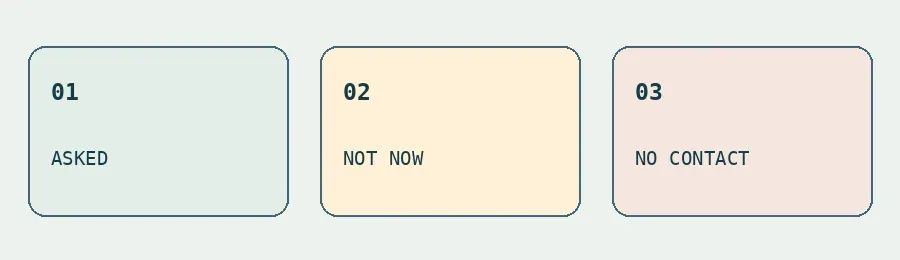
Original comparison, not product labels or UI. Politeness can occur in every category without granting permission.
Use labels only as reviewed cues
Log the original sentence, label and human disposition. One stop request labeled interested or one ‘not now’ read as consent rules out action on labels; use a manual queue first. Adopt as a cue only if every case passes and review beats triaging from scratch. Do not assume language coverage from the label documentation; test each language separately offline. No sending, automated follow-up or customer data.
Content note:This article is based on publicly available information and is intended as a reference for evaluating tools. Features, pricing, and related policies may change at any time; please refer to the latest official information.
Original source:learning.amplemarket.com