Anyword buying guide: should high-scoring copy make the shortlist?
A fictional event separates fact-checking, model ranking and real performance.
Anyword’s predictive score is a screening signal for comparable drafts, not a click or sales rate. The vendor tested whether models could pick the better of two drafts using historical A/B data. That isn’t a new experiment on your channel and doesn’t verify factual claims. If you only revise one or two lines a week, an editor can usually check accuracy and wording without paying for scores. (Vendor benchmark)
Check facts before comparing ranks
Imagine an existing public events page and a fictional Saturday blueprint workshop. The fact sheet supports “materials supplied,” not “everyone takes home free tools.” Draft A makes the latter claim and shows a hypothetical 84. Draft B only promises materials and shows 72. Reject A before you shortlist B. Neither number is a measured score or a probability.
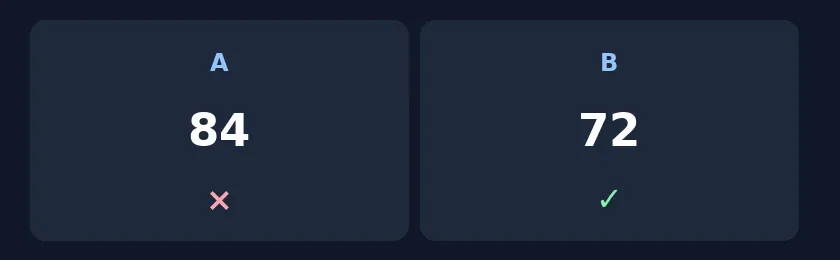
Original illustration: a failed fact check overrides a higher score.
Keep the channel, goal and reader assumptions fixed. Change one headline element and hold dates, capacity and the call to action constant. Write five pairs, have a colleague check and rank them without seeing the scores, then compare rankings. Record why a score changed the shortlist. Don’t pay if high ranks repeatedly ride on exaggeration, add no clearer fit to the brief or increase review time. Consider it if you routinely have too many fact-checked drafts to review. This pilot publishes nothing and uses no tracking; it cannot establish conversion.
Content note:This article is based on publicly available information and is intended as a reference for evaluating tools. Features, pricing, and related policies may change at any time; please refer to the latest official information.
Original source:www.anyword.com