Choosing Apodex: three references can share one source
Use a fictional exhibit to check whether opening time and room have independent support of their own.
Apodex’s launch note describes parallel research with evidence checks. When preparing an exhibit map, count where each claim originated, not how many publications repeated it.
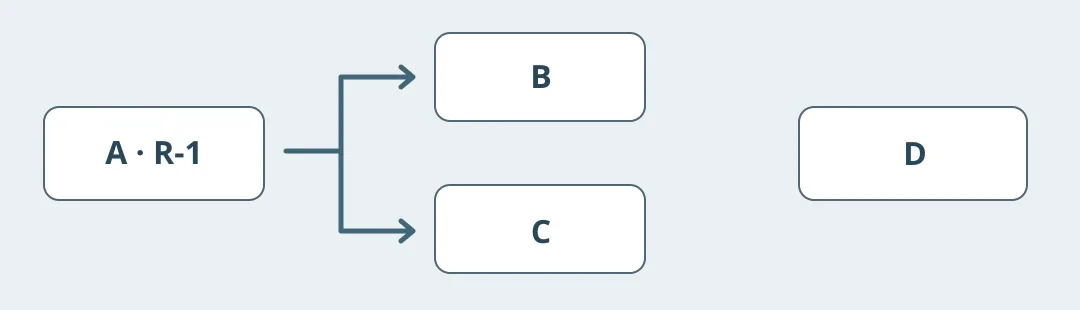
Figure 1. A is the original notice R-1. B and C add no room evidence, and D confirms the time only.
Work through a paper exercise using four documents you wrote. A is the original notice, R-1: Saturday at 14:00, library east hall. B and C are bulletins that repeat A. D is an independently written staffing schedule with Saturday at 14:00 and no room. A summary that attaches all four sources to both fields fails. A and D independently support the time. Only A supports the east hall.
Give another editor the conclusions and their evidence chains. Ask them to reopen the originals, check each field, and flag repeated material counted as independent or evidence attached to the wrong claim. Trace four short documents by hand if you can do so quickly. Consider Apodex for frequent briefings with more derivative sources only if its evidence chains make originals faster for an editor to recover. This is an offline exercise with fictional materials, not a measured product result.
Content note:This article is based on publicly available information and is intended as a reference for evaluating tools. Features, pricing, and related policies may change at any time; please refer to the latest official information.
Original source:www.apodex.com