Apollo Federation buying guide: do two teams need two subgraphs?
Check field ownership and entity identity before taking on composition and routing overhead.
Two teams do not automatically need federation. If one team still deploys and troubleshoots the API, one GraphQL schema split into code modules is usually simpler. Consider Apollo Federation if catalog and inventory ship independently and clients need fields from both in one request. Apollo made Federation 2 generally available in 2022. Its rules let subgraphs contribute different fields to one keyed entity; duplicate fields generally require explicit sharing and compatibility. (Official composition rules)
Check ownership with three identifiers
Here is a paper-lantern example for desk review. Catalog owns the name; inventory owns available quantity. Both use the same stable prop ID as the entity key. A is catalog item A-17, Paper Lantern. B is inventory item A-17, with 3 available. The intended result has the name and 3. C is inventory item B-04 and must not join to A-17, even if the names match.
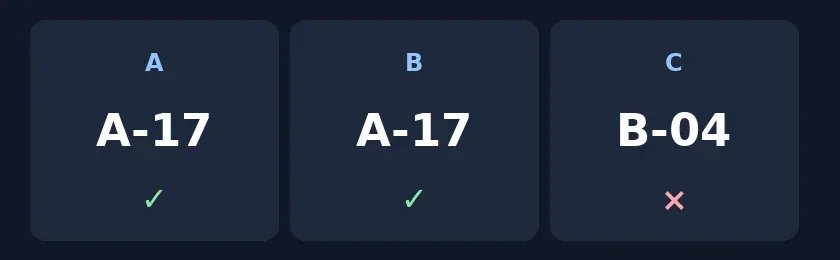
Original diagram, not a runtime result. Matching names do not substitute for matching IDs.
Before review, write down who can change the key and who owns quantity. Walk through matching keys, a wrong key and missing inventory. Agree how to represent unknown stock rather than silently converting it to zero. Successful composition does not prove IDs refer to the same object or that inventory is reachable at runtime; validate those separately. Pick federation only if ownership and incident responsibility are clear and independent releases save recurring coordination. Otherwise keep one graph. The example uses no accounts, real catalog or running service.
Content note:This article is based on publicly available information and is intended as a reference for evaluating tools. Features, pricing, and related policies may change at any time; please refer to the latest official information.
Original source:www.apollographql.com