AppDeploy buying guide: what did that green report not test?
An offline acceptance exercise separates passes, failures and cases that did not run.
If you only ship a static event notice, clicking links and checking a narrow layout is usually faster than adding a deployment and QA workflow. Consider AppDeploy when interaction changes recur and reviewers need test evidence by version. The official 2026 changelog distinguishes agent-untestable cases from app failures on June 2 and adds a passing-results filter on June 15. Filtering helps reviews, but can hide failures and gaps. Start with the whole list. (Official changelog)
Rehearse without deploying
Imagine a fictional paper-craft guide with no accounts, secrets or real data. A covers navigation and narrow layout, both passing. B clears a filter and should restore all three cards, yet the hypothetical result shows one: a failure. C checks reading on a slow connection and was not covered. Only two of four planned cases passed. Do not mistake two green results for a clean sweep.
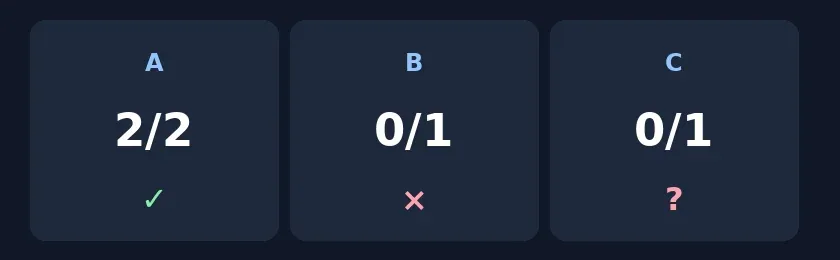
Original diagram, not an AppDeploy report. Zero passes can mean a failure or no test.
Write down each critical case’s setup, expected result, status and reviewer. Fix and retest B. If C is a release requirement, wait for a separate human check instead of treating it as a failure or a pass. Use your own release gate, not the vendor pass rate. Adopt the tool only if reports link to a version, distinguish untested cases and save more rework than review time. This is a desk exercise, not a deployment or a release guarantee.
Content note:This article is based on publicly available information and is intended as a reference for evaluating tools. Features, pricing, and related policies may change at any time; please refer to the latest official information.
Original source:appdeploy.ai