Arcade.dev buying guide: does giving an agent a tool give the user access?
A fictional three-case matrix checks user and agent permissions separately.
For one read-only tool owned by one team, the application’s existing authorization is often clearer. Consider Arcade.dev when several agents share tools and each call must honor the user’s permissions. The official August 13, 2026 release distinguishes organization management roles from runtime authorization, which takes the intersection of user permissions and agent scope. An admin seat is not a business-data credential. (Source)
Use a fictional paper-pattern card for a desk review. The read tool should return only the pattern ID; no real tool or account is connected. A: both user and agent may read, so expect fictional P-7. B: user may read but agent has no scope; deny. C: agent may read but user has no permission; deny. Record the effective user, tool and decision for each case, without saving full prompts or any credentials.
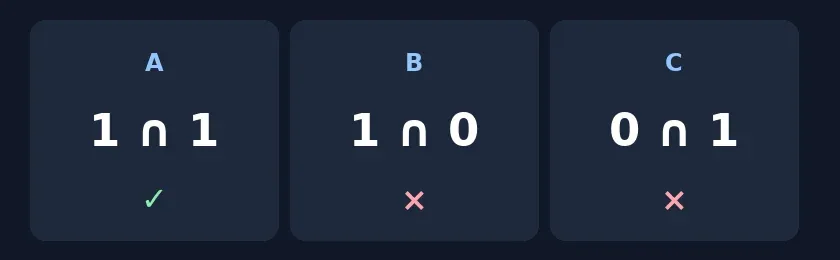
Original permission matrix, not an Arcade report. The left bit is the user and the right bit is the agent.
If B or C passes, stop adoption; hiding a tool in the UI is not formal enforcement. For A, check that the response is just the ID, not the whole card. If existing authorization can distinguish the cases and ownership, don’t maintain another layer. Adopt only if shared authorization reduces duplicate integration work while reviewers can still trace the tool and user boundary. No execution, authorization grant or external action occurs here.
Content note:This article is based on publicly available information and is intended as a reference for evaluating tools. Features, pricing, and related policies may change at any time; please refer to the latest official information.
Original source:www.arcade.dev