Choosing AutoLeap: after a reschedule, check that the old slot is no longer active
Use a fictional appointment to verify the new slot, duplicate records and the front-desk handoff before migrating calendars.
A shared calendar may be enough for a small shop that changes only a few appointments a day. AutoLeap is worth comparing if separate people record calls and online bookings and often have to explain which entry is valid. The vendor’s 2023 announcement already described appointment scheduling, and its feature page brings booking, the shop calendar and notifications together. Integration does not prove that every channel updates promptly after a change, or guarantee fewer no-shows.
Use one ID and count active appointments
Create a wholly fictional A17 card on paper with only a sample front-desk label, not names, plates or phone numbers. Move it from 10:00 to 14:00 the same day. Check three things: A17 appears only at 14:00 on the active schedule; 10:00 no longer blocks a slot, yet authorized change records make the old time traceable; and a returning colleague can name the final time without asking a customer to come twice. The illustration is a planning example, with no linked shop calendar, real booking, text or email.
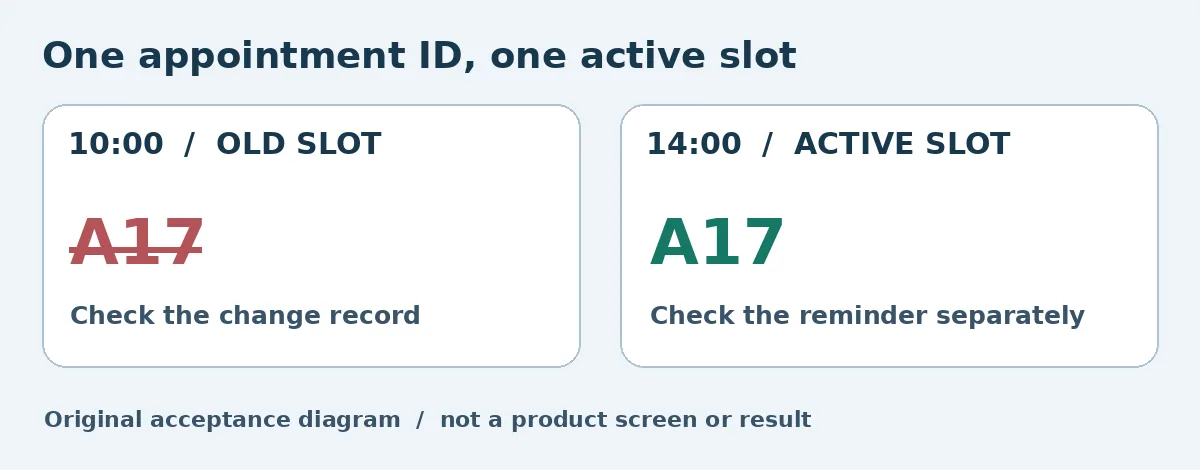
Original paper test, not a product screen or result. The old slot should leave the active calendar but remain verifiable in authorized records; delivery is checked separately.
Treat the schedule change and its notification separately
For reminders, inspect only a preview or paper mock-up. Does a new reminder say 14:00? Is the old one still pending? Can a person see that a failed message requires follow-up? A correct calendar does not prove delivery. Record who confirmed the change and when, rather than using an icon as proof of receipt. For multiple booking channels, check which allow edits, who may edit, and whether reconciliation or export retains the source before connecting anything.
Compare the same fictional appointments in the existing tool and the vendor demo. Include time spent changing, checking, handing off and handling exceptions, and confirm charges for accounts, migration, reminder usage and locations. Keep the shared calendar if it avoids duplicates and conflicts. Migrate only if active records remain clear, people can intervene and total costs are lower. This exercise says nothing about repairs or driving conditions.
Content note:This article is based on publicly available information and is intended as a reference for evaluating tools. Features, pricing, and related policies may change at any time; please refer to the latest official information.
Original source:www.globenewswire.com