Choosing Baidu Comate: does a fluent explanation get the empty list right?
Check Comate’s explanation against three fictional UI states and separate covered branches from guesses.
A quick explanation helps when you inherit an unfamiliar UI module. The real question is whether it confuses states that look similar. Baidu Cloud’s inline commands documentation describes explanation for selected code, mostly functions or methods, and lists function comments and unit-test generation separately. Evaluate explanation only: generated comments are not specifications, and no test code is generated or run here.
Write three expected outcomes on paper
Create an invented exhibit-label list. While waiting for data it should show Loading. Once finished with zero entries it should show No labels. Once finished with two it should show those two. If the logic checks waiting before counting, an explanation must not equate No labels with loading or suggest two present entries mean all historical data is always shown. Have a reviewer map each explanation to its branch. Two entries are a fictional example, not a product limit. The figure is an acceptance aid, not a Comate result.
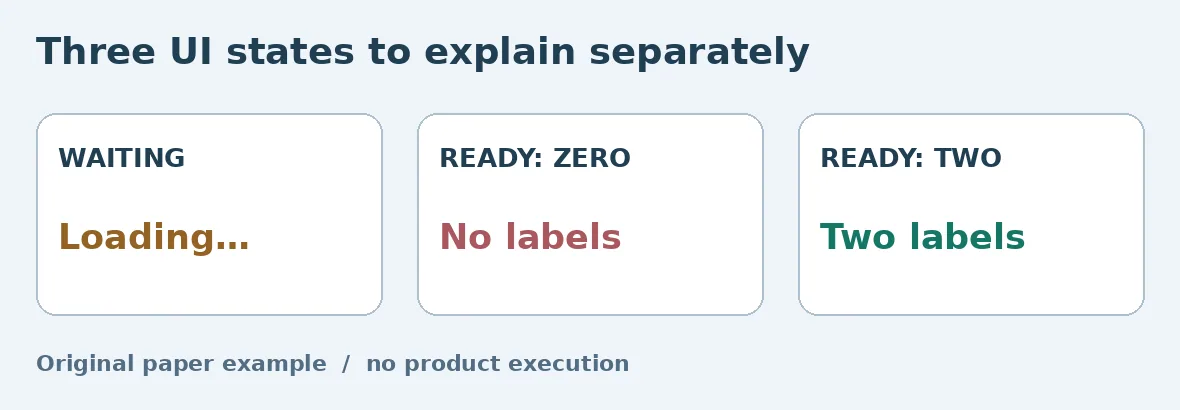
Fictional acceptance test for code explanation, not a product screen or result. Not done reading is different from finished and actually empty.
Include review in the cost
Compare manual reading with the proposed explanation. Are all three branches covered? Which claims come from the selection, and which infer a caller or design intent? Mark anything not in the snippet as unknown. This paper example opens no workspace, connects no repository, submits or runs no code and changes no files. If outside processing is restricted, verify organizational approval, editor support, input scope and retention before adopting; do not test with real material.
Measure preparation, line-by-line verification, corrections and manual supplements, and check seats and plan. Keep existing documentation if it is already clear, or if checking mistakes costs all the time saved. Expand only when repeated handovers save time, a person verifies the key branches and the permission boundary fits.
Content note:This article is based on publicly available information and is intended as a reference for evaluating tools. Features, pricing, and related policies may change at any time; please refer to the latest official information.
Original source:cloud.baidu.com