EP–2350 FX–MIC buying guide: An echo is not an independent cue
A paper comparison separates effects on an existing input from a separate short sound that must not depend on that input.
The EP–2350 FX–MIC product page distinguishes built-in effects from four replaceable, individually triggered samples. The official 1.1.2 record dated September 7, 2026 documents support for this model. Decide whether you need to change the sound coming in or add a cue of its own: both can look like another sound on a timeline.
Draw a fictional wooden tap. In the top row, small dots are echoes of that tap. Below it, draw the same tap and, separately, a card for two short sounds. Hide the explanation before asking a reader which row fits each brief: leave a tail after the tap; or allow the pair of short sounds even when there is no tap. The tail alone is not evidence of a separate trigger. This paper exercise does not show actual behavior with no input, effects, or latency.
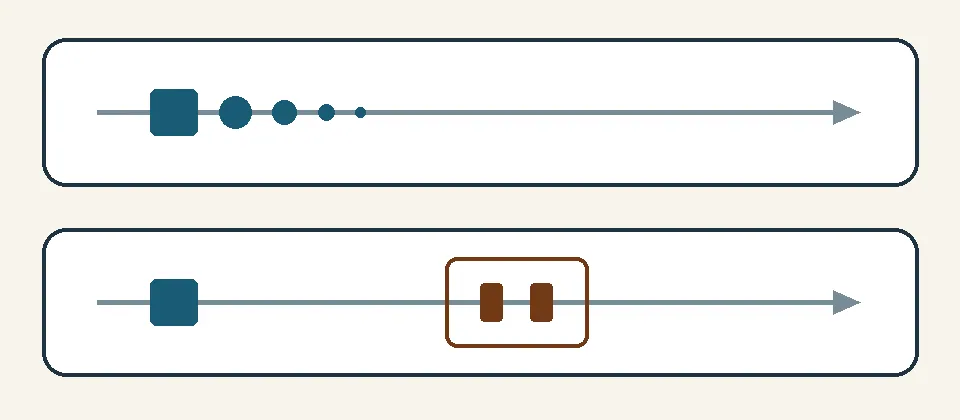
Paper illustration: the top row continues the same tap; the card in the bottom row is an independent cue, not an echo.
Compare an all-in-one device if a performer needs both functions at hand. For clean input only, or when cues already have their own device, consider leaving the arrangement as it is. Check that the receiving setup takes processed audio and whether you need a separate clean version. Compact design does not guarantee either. No device setup, recording, or copying is involved.
Content note:This article is based on publicly available information and is intended as a reference for evaluating tools. Features, pricing, and related policies may change at any time; please refer to the latest official information.
Original source:teenage.engineering