FilterPixel buying guide: If you keep one similar image, will it cover every required view?
Three original drawings separate duplicate angles from a second view that cannot be replaced.
FilterPixel’s workflow guide describes grouping similar photos and checking details side by side. This narrows a review but does not decide whether one image per group will suffice. If the handoff needs several views, ask what each frame can still show.
Front and oblique views answer different questions
Draw three cards of a fictional display stand. A and B are front views with the same clear mark. C shows the front and an oblique side view with a notch visible only from that angle. The handoff needs one image showing the front mark and one showing the notch location. Either A or B covers the first item. Dropping C because it has the same mark and colors leaves no image explaining where the notch is.
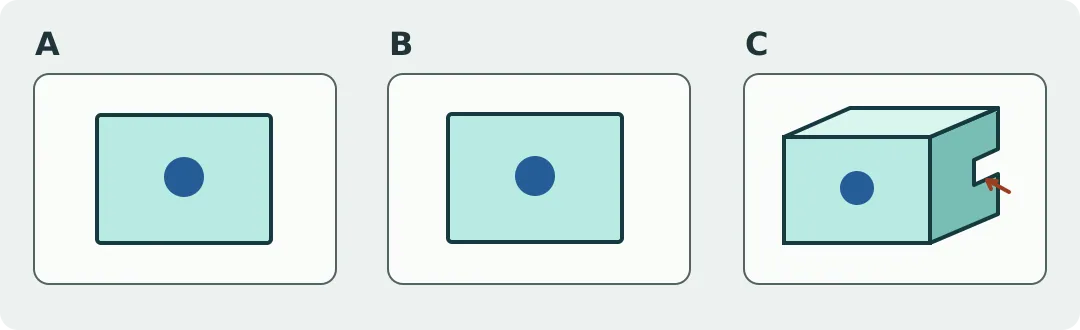
Choose A or B for the front view. C provides the side detail neither shows.
Cover the notch in C. Two angles remain, but none shows the notch. For acceptance, note which view supports each requirement and whether the detail is confirmed visible. If a view is missing, record the gap rather than counting the selected frames.
When is grouping similar frames worth it?
If there are many near-identical views and a precise shot list, grouping helps remove true duplicates before a human confirms coverage. If there are only a few frames or slight angle changes each matter, manual comparison may be faster. Include time to review omissions, find images again or retake them. This is geometry on paper only: no photography, upload or editing of real assets.
Content note:This article is based on publicly available information and is intended as a reference for evaluating tools. Features, pricing, and related policies may change at any time; please refer to the latest official information.
Original source:filterpixel.com