Fivetran buying guide: A row changed twice. How do you estimate usage in history mode?
Use two changes and one unchanged day in a fictional exhibit label to distinguish the latest value, retained versions, and monthly active row usage before deciding whether history is worth keeping.
If a record changes and later returns to its original value, a destination that stores only the latest state may show nothing about what happened in between. The sync mode documentation for Fivetran distinguishes soft delete mode, which retains a marker for deleted rows, from history mode, which records row versions. They differ in more than table layout. The latest state answers “What is it now?” A question like “What did we see that day?” may require a version that used to be active. Choose the question before deciding whether you need history mode.
Try a record with the same final value but a different path
Use a paper color record for a fictional exhibit label J1. A new entry is blue on day one, changes to orange on day two, stays orange on day three, and returns to blue on day four. Ask a colleague to find the day-two color from the latest value on day four. They can confirm it is blue now, but cannot infer the day-two color. Give them paper version cards with the start of each change. Day two now corresponds to orange and day four to blue. Day three has no new state and is not another change. The check is whether you can identify when each version took effect and recover the intermediate value, not simply count replicated rows. The four cards are invented; they do not show that the product captures every transition a source makes between reads.
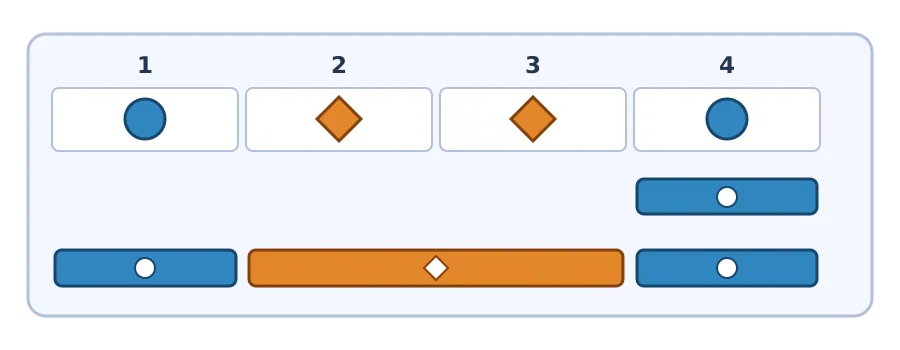
Figure: The top row shows four days, with a blue circle and orange diamond distinguishing the two colors. The middle shows only the final blue. The bottom shows three active versions over time; the orange bar spans two unchanged days.
Do not maintain history you will never use
If a downstream team needs to review old batches and its connector and table support history mode, check how they will identify past versions and budget for repeated changes. The official 2026 billing documentation says that under the applicable rules, repeat updates in history mode count toward monthly active row usage, while an unchanged row adds no new change. Check the terms that determine when the policy applies to your contract. If all four example days fall in one billing month, all three writes are captured, and the rule applies, the paper estimate is one insert plus two updates: three changes. Day three adds none. This is not a quote for the total bill. If the only question is which color to print today, keeping the current value and any required deletion state is simpler than keeping the entire version history. This exercise does not connect a data source or modify a database.
Content note:This article is based on publicly available information and is intended as a reference for evaluating tools. Features, pricing, and related policies may change at any time; please refer to the latest official information.
Original source:fivetran.com