Is Salespeak Agent Analytics worth connecting? Put crawls and clicks in separate tables
Check CDN requests and browser referrals on two test paths so AI requests are not mistaken for acquisition.
Salespeak's 2026 research counted AI page crawls and human clicks separately. Its product documentation distinguishes two collection routes: identified agent requests at the site edge, and human visits referred by AI products through browser JavaScript. A request only shows that a page was fetched; it does not prove citation or link to a sale.
Test both sources away from production
Put two fictional documents on your own test site. Use supported test routes to observe A, a synthetic agent request at the edge, and B, a simulated browser referral. Have a colleague reconcile the same date, time zone and page across reports. A must not count as a human visit and B must not count as a crawl. If the routes cannot be isolated in a demo or staging site, record the classification as unverified rather than switching to real traffic.
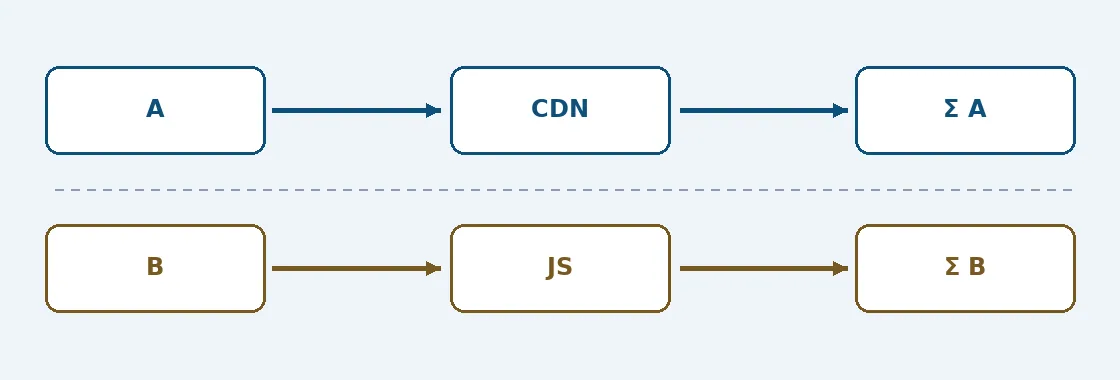
Original two-stream diagram, not product UI: A counts agent requests at the edge; B counts human referrals in browser JavaScript. The lanes are parallel, with no link from an individual request to a visitor.
Compare alternatives and what you collect
If you have edge logs, first answer which documents are requested with redacted totals and existing browser reports. Add a tool only if page classification or weekly handoff materially improves. For referral clicks alone, try your existing report. The product page says request records can include URLs and IPs; confirm access, retention and deletion before production. Keep secrets out of test URLs. Count maintenance, permission review and reconciliation time, not supposed attributable revenue.
Content note:This article is based on publicly available information and is intended as a reference for evaluating tools. Features, pricing, and related policies may change at any time; please refer to the latest official information.
Original source:salespeak.ai