Lovable
AI full-stack app builder for turning product ideas, prompts, screenshots, and docs into deployable web applications with editable code, GitHub sync, collaboration, and governance controls.
Decision summary
Choose if
Choose Lovable when the project begins in Lovable and developers need two-way GitHub synchronization with one selected active branch.
Compare before choosing
Compare Bolt or v0 when importing an existing repository is required, or compare Base44 when an integrated app and backend path is the primary attraction.
Verify before adoption: Connect a disposable repository and confirm the selected active branch. Make changes on both sides and observe two-way synchronization. Test disconnect, external development, publishing, and recovery.
About Lovable
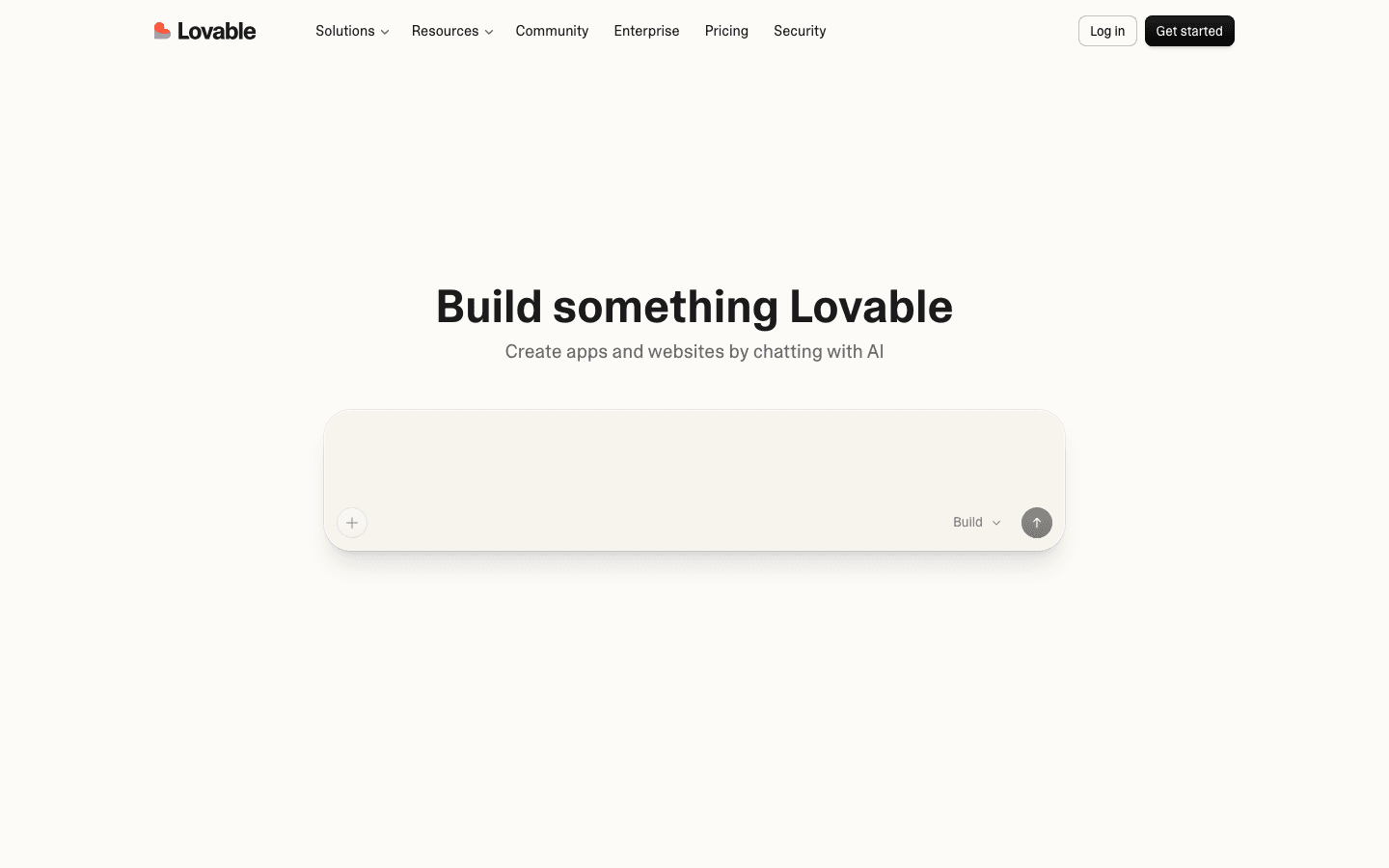
Lovable is a full-stack AI development platform for building, iterating on, and deploying web applications using natural language. Official documentation describes it as a platform that can generate frontend, backend, database, authentication, integrations, and editable code, with shared workspaces and GitHub-oriented workflows. Lovable is best for founders, product managers, designers, operators, agencies, and engineering teams that need to turn an idea, screenshot, document, or workflow into a working prototype, internal tool, SaaS concept, or marketing/app hybrid quickly while preserving a path to code ownership. It is broader than a prompt-to-UI generator because it covers app logic, data, auth, connectors, publishing, workspaces, and governance. It is not a magic production replacement: generated applications still need review for architecture, permissions, security, data modeling, dependency quality, scalability, and maintainability. Buyers should compare it with v0, Bolt, Replit, Cursor, Framer, Webflow, and Retool based on whether the goal is full-stack app creation, code ownership, non-engineer collaboration, visual site publishing, developer sandbox control, or enterprise operations. Lovable is strongest when a team wants to validate software ideas quickly and then move promising outputs into a more formal engineering workflow. Related decision guide: [Lovable Cloud vs owned Supabase backend control](https://goze.tools/en/articles/lovable-cloud-vs-supabase-backend-control).
Best for
Compare before choosing
v0 is stronger for React/Next.js and Vercel-centered frontend generation; Lovable is broader for full-stack app ideas, non-engineer workflows, and collaborative prototyping.
Bolt and Replit should be compared when browser-based coding, package execution, or developer sandbox control matters more than product-builder simplicity.
Cursor is better for engineers maintaining an existing repository; Lovable is better for starting a new app or prototype from natural-language product intent.
Framer and Webflow are better for visual marketing sites; Lovable is better when the project needs app logic, authentication, data, or internal-tool flows.
Retool and internal-tool platforms should be compared when governance, connectors, and enterprise operations matter more than AI-first app generation.
Features
Natural-language app generation
Describe an app or website, add context, and turn the idea into a working prototype that can be refined through feedback.
Full-stack output
Generate application surfaces that can include frontend, backend, database, authentication, integrations, and deployable behavior.
Editable code
Keep a path to code ownership so teams can review, extend, and move promising projects into engineering workflows.
GitHub workflow
Use GitHub-oriented handoff when generated projects need engineering review, branching, and ongoing maintenance.
Shared workspaces
Let founders, product, design, go-to-market, agencies, and engineering teams collaborate across projects.
Templates and connectors
Start from templates and connect applications to external services instead of building every integration from scratch.
Publishing controls
Move from prototype to published app with role and approval boundaries for safer collaboration.
Security scanning
Use documented basic and deep security scanning, dependency checks, and publish-blocking controls before production exposure.
Enterprise governance
Review SSO, SCIM, RBAC, data residency, training opt-out, audit logs, sharing controls, and support for larger organizations.
Pros
- Fast path from idea, screenshot, or document to a working full-stack web application.
- Broader than frontend-only generators because it covers app logic, data, auth, connectors, publishing, and workspaces.
- Accessible to non-engineers while still preserving a path to editable code and engineering review.
- Good fit for MVP validation, internal tools, campaign apps, prototypes, and early product exploration.
- Security and governance story includes SSO, SCIM, RBAC, data residency, training opt-out, approvals, and scanning.
- Pricing is simple to evaluate at Pro and Business levels, with Enterprise available for larger organizations.
Cons
- Generated applications still require engineering review before production, especially for data, auth, permissions, and security.
- Credit usage and Cloud + AI consumption can be hard to estimate during heavy iteration.
- Less suitable than Cursor or Claude Code for maintaining a mature existing repository in an IDE or terminal.
- Teams with strict private infrastructure must validate deployment, data residency, connectors, and source-control boundaries.
- Non-technical builders may still need engineering support to harden successful prototypes.
- Visual site builders may be simpler when the project is only a marketing site without app logic.
Pricing Plans
Free
- Start building for free
- AI app generation
- Prototype creation
- Good for first evaluation
Pro
- Shared across unlimited users
- 100 monthly credits
- 5 daily credits
- Usage-based Cloud + AI
- Custom domains
- Roles and permissions
Business
- Shared across unlimited users
- Internal publish
- SSO
- Team workspace
- Design templates
- Security center
Enterprise
- Volume-based credit pricing
- Dedicated support
- Onboarding services
- Design systems
- SCIM
- Audit logs
* Pricing information is for reference only. Please refer to the latest announcement on Lovable's official website.